
The Perks of Sailing From a Cruise Port Close to Home




Are you within driving distance of a cruise homeport? You may not realize how lucky you are. Plenty of cruisers have to fly to reach their ship, so cruising from a homeport is a convenience that’s easy to overlook until you actually do it.
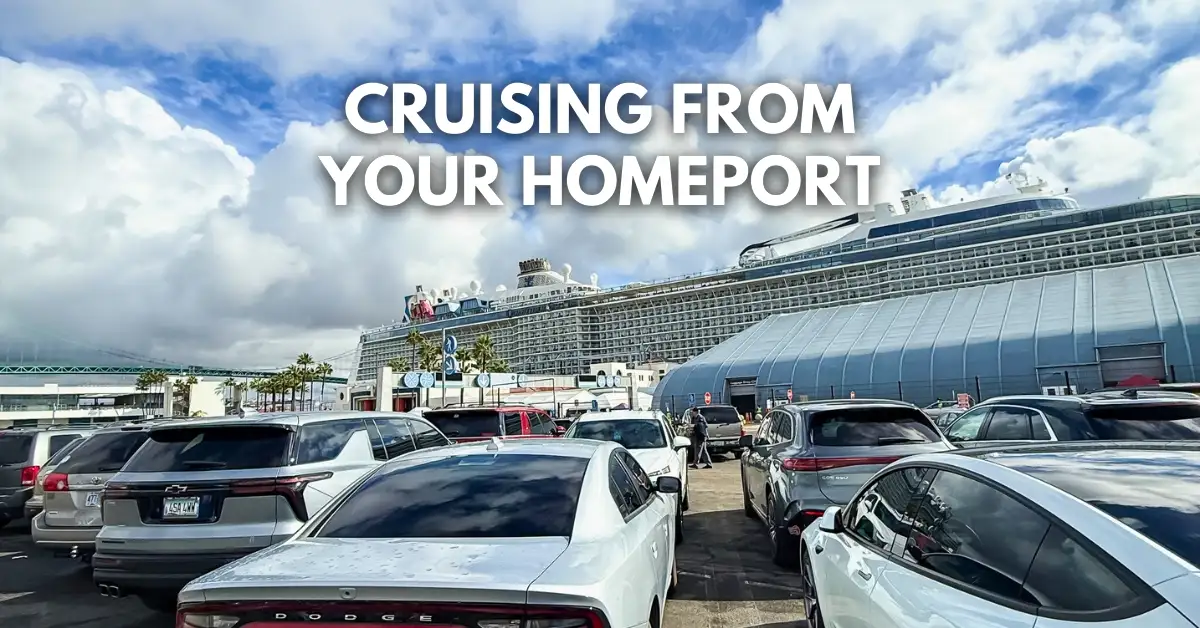
Starting a cruise this way cuts out a lot of the usual hassle. No airports. No dragging luggage through security. No rushing across terminals hoping your connection behaves. You drive over, board, and your vacation begins without all the extra steps.
A quick note, because this comes up often: if your city appears as a port stop on an itinerary, that doesn’t mean you can board there. You can only embark at the cruise’s designated starting port, which is precisely why having a true homeport nearby is such a perk.
That said, your homeport won’t always have the exact itineraries or ships you’re dreaming about. Some ports only offer a handful of routes each season, and the newest ships rotate through the bigger markets. And if you live in Florida… you already know you’re spoiled compared to the rest of us.
If you haven’t looked into the perks of sailing from a cruise port close to home, it might surprise you how much it changes the experience.
The Joy of Not Having to Fly to Your Cruise
Not having to book a flight, drive to the airport, go through TSA, and deal with the crowds to reach your cruise ship feels like a luxury in itself. As much as I love to travel, the older I get, the less excited I am about squeezing onto a plane unless I’ve splurged on priority boarding and extra legroom. And even then, I’m still giving myself the pep talk that “the journey is part of the trip.”
Once I’m on the cruise ship, any stress from the morning disappears, but skipping the airport entirely takes things to another level. When I sail from my homeport, there’s a real sense of relief. No liquid limits to think about, no early-morning alarms, and no flight delays hanging over embarkation day. You drive, park, and walk onto the ship.
No Pre-Cruise Hotel Required
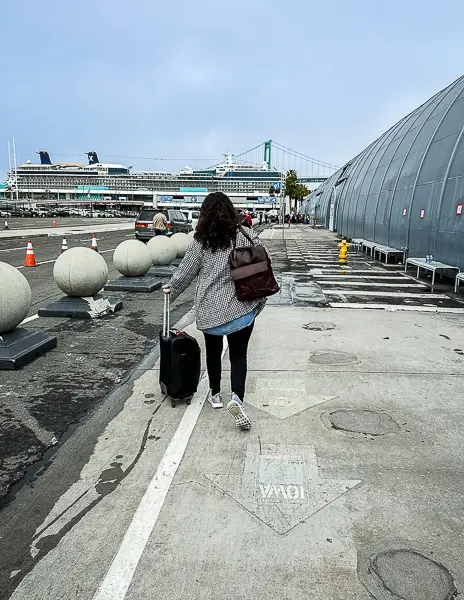
One of the quiet perks of sailing from a cruise port close to home is skipping the whole pre-cruise hotel shuffle. You can still book one if you’re in the mood for a “treat yourself” night, but you’re no longer forced into an extra travel day to make sure you don’t miss the ship.
No guessing how early you need to arrive, no praying your flight isn’t delayed into the night, and no dragging your luggage into a hotel lobby when all you want is a shower and some sleep. You get to stay in your own bed, wake up like a normal human, and drive straight to the port instead of turning embarkation into a two-day operation.
Starting a cruise from home makes embarkation day feel less like a logistical puzzle and more like a typical morning that happens to end with you stepping onto a ship.
Packing Gets a Whole Lot Easier
Cruising from a homeport means you can finally stop playing suitcase Tetris for the airlines. No weighing your bag three times, no debating which shoes earn their spot, and no wondering if your toiletries are about to get flagged at security. You can pack more if you wish, and you don’t have to worry about fighting for overhead bin space or paying extra to check a bag.
If you want to bring the extra jacket, the backup outfit, or that full-size bottle of your favorite product, go for it. When you’re driving to the port, your luggage only has to impress you — not an airline scale.
It takes a surprising amount of pressure off packing when you know you’re not negotiating with carry-on rules, overhead bins, or praying your suitcase doesn’t tip over the weight limit.
Read more: Cruise Packing Essentials You May Not Have Thought About
A Much Calmer Embarkation Day
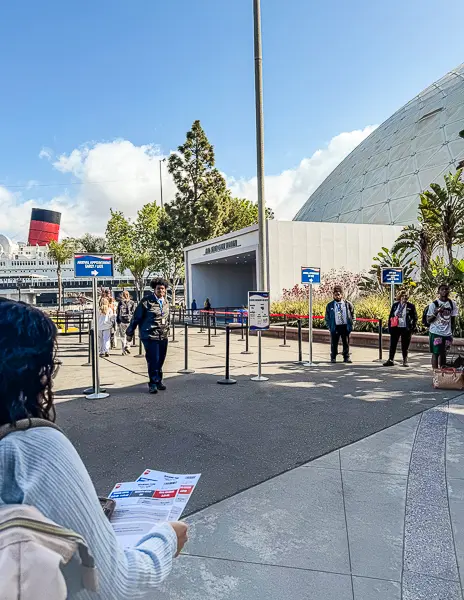
Driving to the port from your own home has an entirely different feel. It’s still exciting — it’s embarkation day, after all — but it comes without the extra layer of stress that comes with airports and hotel stays. Most cruisers flying in have already spent a day traveling, settling into a hotel, and trying to shake off that “travel tired” feeling before they even reach the terminal.
When you sail from a homeport, you skip that whole routine. You wake up in your own space, get ready at a comfortable pace, and head to the port without juggling airport schedules or late-night arrivals. By the time you’re pulling up to the terminal, you haven’t already drained half your energy.
Debarkation Day Is a Lot Less Stressful
One thing I didn’t fully appreciate until I cruised from home: debarkation day suddenly becomes calm. You don’t have to rush off the ship to catch a flight, stress about airport traffic, or drag your luggage across a terminal before sunrise. You can actually sit down for breakfast, take your time getting out, and then walk to your car or grab an Uber home.
It’s not the usual rush to the airport, and I’m not mad about it.
You Start Vacation Rested, Not Drained
There’s a huge difference between starting your cruise after a regular night at home and starting it after airports, flights, and a hotel stay. And yes, flying in the day before is the cardinal rule — nobody should be landing the morning of their cruise. But even with that buffer, travel still takes a toll. You’re dealing with airports, delays, time zones, and whatever chaos comes with getting there.
Sailing from a homeport lets you bypass that entire travel marathon. You wake up in your own bed, get ready without rushing, and drive straight to the terminal. No jet lag. No stiff neck from a cramped flight. No dragging yourself through a hotel lobby the night before embarkation.
It changes the tone of the entire first day. You step onto the ship, rested and in cruise-vacation mode on a whole other level, not having recovered from the trip there in the first place.
You Spend Less Before You Even Board
Skipping airfare alone can make a noticeable difference in your cruise budget. By the time you add airport transfers, rideshares, parking fees, and an overnight hotel stay, the cost of simply getting to your cruise starts climbing fast. Even when flights look reasonable, the extras have a way of sneaking in.
Sailing from a homeport takes most of that off the table. You’re not paying to check bags, paying for a seat with real legroom, or paying to get from the airport to the terminal. You drive to the port, park, and walk on board. Yes, there’s still parking or an Uber to think about, but those costs rarely compete with airfare and a hotel night. And if a friend or family member can drop you off, even better.
Money you didn’t spend getting to your cruise can easily go toward an upgraded cabin, a shore excursion, or a few extra treats once you’re onboard.
Fewer Things Can Go Wrong
Flying introduces a lot of variables that can throw off your cruise plans. Missed connections, weather delays, canceled flights, and the classic “your luggage did not make it” moment can turn into a stressful race to the port. Even flying the day before doesn’t shield you from everything the airlines can pull.
Driving to your homeport cuts out most of that chaos. You’re dealing with traffic, not airline roulette, and you leave on your own schedule. Your luggage stays with you instead of detouring to another city, and the whole process removes a significant layer of uncertainty from getting to your ship.
Short Cruises Suddenly Make Sense
Planning a 3-, 4-, or 5-day cruise makes so much more sense when you don’t have to fly. A weekend cruise actually feels like a weekend cruise — not a trip loaded with flights, hotel nights, and a recovery day. When you can drive to the port, these short sailings finally feel like the quick break they’re supposed to be.
I learned this after flying across the country for a weekend cruise on Utopia of the Seas. By the time I arrived the night before, I was already wiped out, and the cruise was so short that I never really caught my breath. After that trip, I knew I would only fly for a short cruise if it were part of a longer vacation.
Cruising from home changed everything. My long-weekend sailing on Carnival Firenze is what really cemented it for me, even though I had cruised previously out of San Pedro on Celebrity Solstice. It was relaxing, easy, and I did not have to fly across the country to make it work. I even got to visit Catalina Island without dealing with a ferry schedule, which felt like its own little win.
More recently, my four-night cruise on Quantum of the Seas made sense for the same reason. It was a great deal and a quick escape from home. I drove to the port, revisited Ensenada, got my taco fix, escaped a storm at home, and spent a couple of relaxing days at sea.
Now I am constantly checking for cruise deals I can drive to from Los Angeles, Long Beach, or San Diego. It is an easy way to feed my cruise addiction between the bigger trips without turning it into a huge production.
Easier for Friends and Family to Join

Group trips get a whole lot simpler when everyone can drive to the port. That sibling who’s always on the fence, the friend who keeps talking about cruising “one day,” or the family member who stresses over travel logistics suddenly has a much easier path to saying yes. A homeport cruise removes so many of the hurdles that usually hold people back.
This perk even applies when you’re the one flying in, and everyone else lives nearby. We’re sailing out of New York later this year, and our family—who lives close—decided to join us. For them, it’s as simple as driving over and meeting us at the cruise terminal, which makes the whole plan feel doable.
When the plan is basically “see you at the terminal,” everything falls into place. No juggling arrivals, no coordinating airport pickups, no complicated logistics. Everyone folds into the trip naturally.
It’s one of the quiet perks of cruising close to home, even if the “close to home” part applies to your friends or family and not you.
You Get Familiar With Your Local Cruise Port and Routine
There is something nice about returning to a cruise port you already know. Parking, drop-off spots, and the check-in flow all feel easier once you’ve done it before. You know where to go, how early you want to arrive, and which areas tend to get crowded.
After a trip or two, the whole process becomes second nature. You pull up, drop off your luggage, park without guessing, and walk inside without feeling like you need to study a map. The familiarity takes a lot of the edge off embarkation day and makes the start of your trip feel smoother.
You Can Cruise More Often
One of the biggest perks of having a cruise port close to home is how easy it becomes to fit more cruises into your plans. When you’re not spending money on flights, hotels, and all the extras that come with getting to a port, those cruise savings can go straight into another sailing.
Many homeports outside of Florida get older or reassigned ships, which usually means lower fares. It’s common to find great prices on three-, four-, and even seven-night cruises, especially during the off-season. Add in the occasional resident discount, and suddenly the idea of cruising more often doesn’t feel unrealistic.
Driving to your homeport also opens the door to last-minute deals. If a sailing pops up at a great price, you’re not scrambling for expensive airfare or trying to piece together a last-minute travel plan. You can book the cruise and just show up.
Cruising from home stretches your budget farther. Spend less getting to the ship, and somehow you end up cruising more. Funny how that works out.
Homeports Have Limits
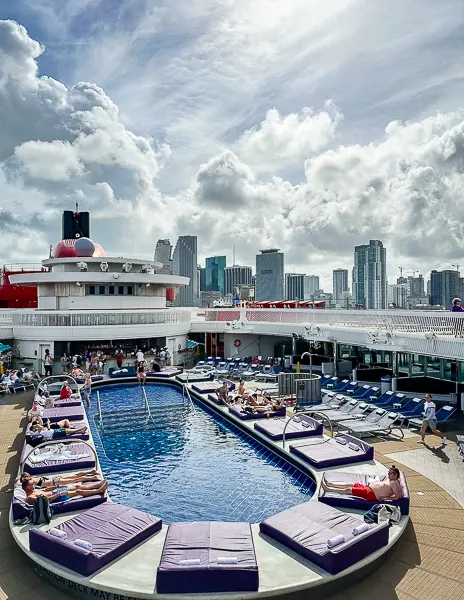
Cruising from a port close to home is convenient, but it has its limits. Your local port will not always have the itineraries or ships you want, and after a few cruises, you may notice the same routes popping up again and again. Some homeports only get older ships or the same few sailings each season, which can make things feel repetitive when you cruise often.
Living in Los Angeles is a perfect example. I love the Caribbean, but I cannot sail there from here. The West Coast sticks to the Mexican Riviera, Pacific Coastal routes, Alaska, or the occasional longer sailings to Hawaii or the Panama Canal. They are great itineraries, but they will not get me to the island hops and turquoise water I crave without a flight.
Another thing to keep in mind is that homeports outside of Florida often see limited cruise lines and fewer newer ships. If you want the newest ships and features, a specific cruise line your port rarely sees, or a longer itinerary beyond the usual rotation, you will probably need to fly for that. The variety is not the same.
And yes, Florida residents are living in a completely different world. They have more ships, more itineraries, and more options than the rest of us combined. The rest of us are over here watching schedules and grabbing whatever pops up that fits our calendar.
Even with these limits, cruising from home still has a place. Sometimes, convenience and a great deal win. I still fly out for longer trips, but local sailings have earned their place in my plans for shorter vacations and quick escapes.
Major Cruise Homeports in the United States

If you’ve never checked whether you live close to a cruise port, here’s a quick look at the major homeports around the country. You might be closer to one than you realize.
West Coast
- Los Angeles, California (San Pedro)
- Long Beach, California
- San Diego, California
- San Francisco, California
- Seattle, Washington
Gulf Coast and South
- Galveston, Texas
- New Orleans, Louisiana
East Coast
- Miami, Florida
- Tampa, Florida
- Fort Lauderdale, Florida
- Orlando, Florida (Port Canaveral)
- Jacksonville, Florida
- Baltimore, Maryland
- Norfolk, Virginia (seasonal homeport)
Northeast
- Boston, Massachusetts
- New York, New York (Manhattan / Brooklyn terminals)
- Bayonne, New Jersey (Cape Liberty)
Pacific / Hawaii
- Honolulu, Hawaii (Pride of America)
Alaska
- Seward, Alaska
- Whittier, Alaska
Caribbean / U.S. Territories
- San Juan, Puerto Rico
These are all major U.S. homeports, though a few—like San Juan and Honolulu—primarily serve fly-in travelers. If one of the others is close enough to drive to, you might have more opportunities to cruise than you think.
Quick Tips for Cruising From Your Homeport

📍 Research your cruise terminal: Many ports have multiple buildings or berth locations, so knowing exactly where your ship docks saves confusion when you arrive.
⏰ Give yourself a little buffer time: Port traffic gets busy fast when multiple ships are boarding.
🅿️ Research the parking situation: Not every homeport has parking right next to the terminal — some use remote lots or shuttles — so it helps to know where you’re supposed to park.
🚗 Drop luggage first: If you’re parking at the cruise terminal, drop off your bags (and your passengers) before you park so nobody is hauling suitcases across the lot.
🏷️ Attach luggage tags at home: Having them on before you arrive makes drop-off with the porter smoother.
💸 Keep an eye out for deals: Some ports offer resident discounts, and last-minute sailings are easier to jump on when you’re not booking flights or hotels.
BEFORE YOU SET SAIL, HERE ARE SOME RELATED ARTICLES YOU DON’T WANT TO MISS:
- 100+ Cruise Tips You’ll Be Glad You Read Before Boarding
- Smart Cruise Packing Starts With These 10 Items
- 8 Things You May Not Expect on Your First Cruise
- Travel Splurges I Love to Say Yes To
- Common Cruise Myths Debunked by a Longtime Cruiser

Kathy Ava
Meet Kathy Ava, a food, travel, and cruise writer based in Los Angeles/Pasadena, and the owner and main writer of Tasty Itinerary. With over 20 years of experience planning trips and logistics at her full-time job and for herself, she's become a pro at crafting unforgettable tasty itineraries. She's always on the hunt for delicious, fun travel destinations and cruise itineraries. She firmly believes that life is short and we must make the most of it, so always say yes to dessert.